DeveloperDAO Official Website
In a mission to accelerate the education and impact of a new wave of web3 builders. - Jun 2023


The Goal
Looking back, this remains one of the most impactful experiences of my career—not because of a perfect handoff, but because it taught me how design works when a community owns the product.
Developer DAO was one of the first places in web3 where I felt I could build the future instead of only read about it. The community already had energy. What it lacked was a public surface strong enough to do two jobs at once:
- Bring builders in — help a curious developer land, understand the mission, and see a path to participate.
- Earn external trust — look credible enough that partners, collaborators, and outsiders took the DAO seriously at first glance.
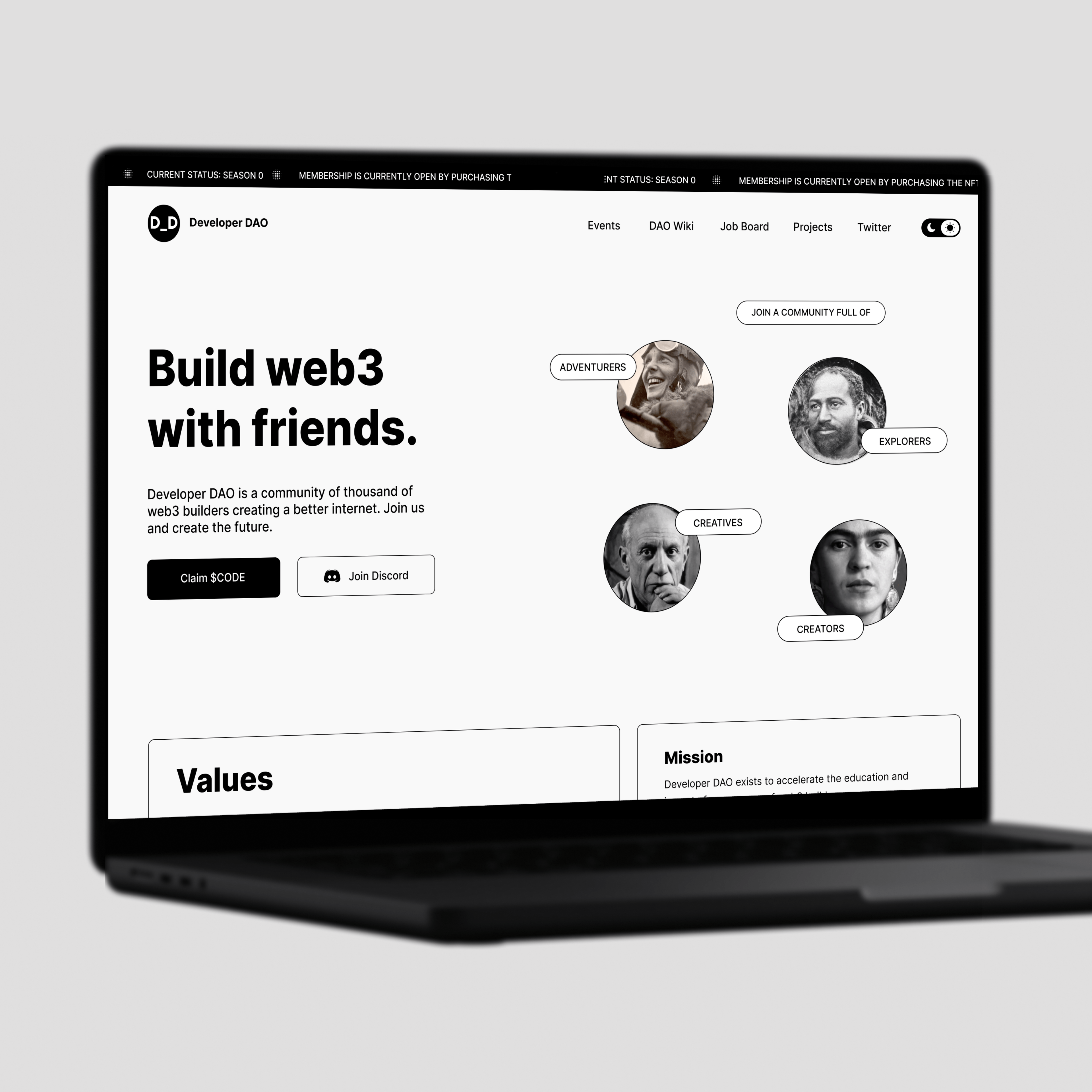
That was the exact goal of the official website: one front door that could welcome new members and represent the DAO to the outside world without feeling like a generic startup landing page.
Champion of the Design
In Developer DAO, progress often depends on a Champion—someone who takes ownership of an idea, shapes it in public, gathers community feedback, and drives it forward. That was my role for the website: I was the champion of the product's design.
Champion did not mean sole author. It meant I was accountable for direction—keeping UI and UX coherent while the room reacted. Every layout and flow still had to pass the same filter: Does this make joining clearer, and does this make the DAO look ready for partnership?
The tone we aimed for was direct and adventurous—innovation without noise. If someone arrived from a tweet, a Discord invite, or a partner introduction, the site had to answer in seconds: What is this, and why should I care?
What Designing Inside a DAO Feels Like
A DAO is not a company with a product manager and a Friday review. It is closer to a living network: members hold governance power, contributors ship across guilds and workstreams, and champions carry initiatives across the messy middle. Tools are Discord, forums, Figma, GitHub—progress is async by default, across time zones, in bursts of energy rather than a locked calendar.
That vibe is part generosity, part friction. You post a draft and watch it get stress-tested by engineers who want more technical depth, builders who want a simpler call to action, and community members who care that the voice still sounds like Developer DAO. There is rarely a final stamp from one boss. Influence is earned by clarity and follow-through—exactly what the champion role asks for.
The hard part is also the gift. As design champion I could not hide behind a silent stakeholder deck. I had to propose a direction, invite feedback the way an RFC invites comments, absorb the tension, and still ship something coherent. When opinions split, we returned to the goal—new members and partnership trust—instead of arguing taste in the abstract.
Surfaces Built for That Goal
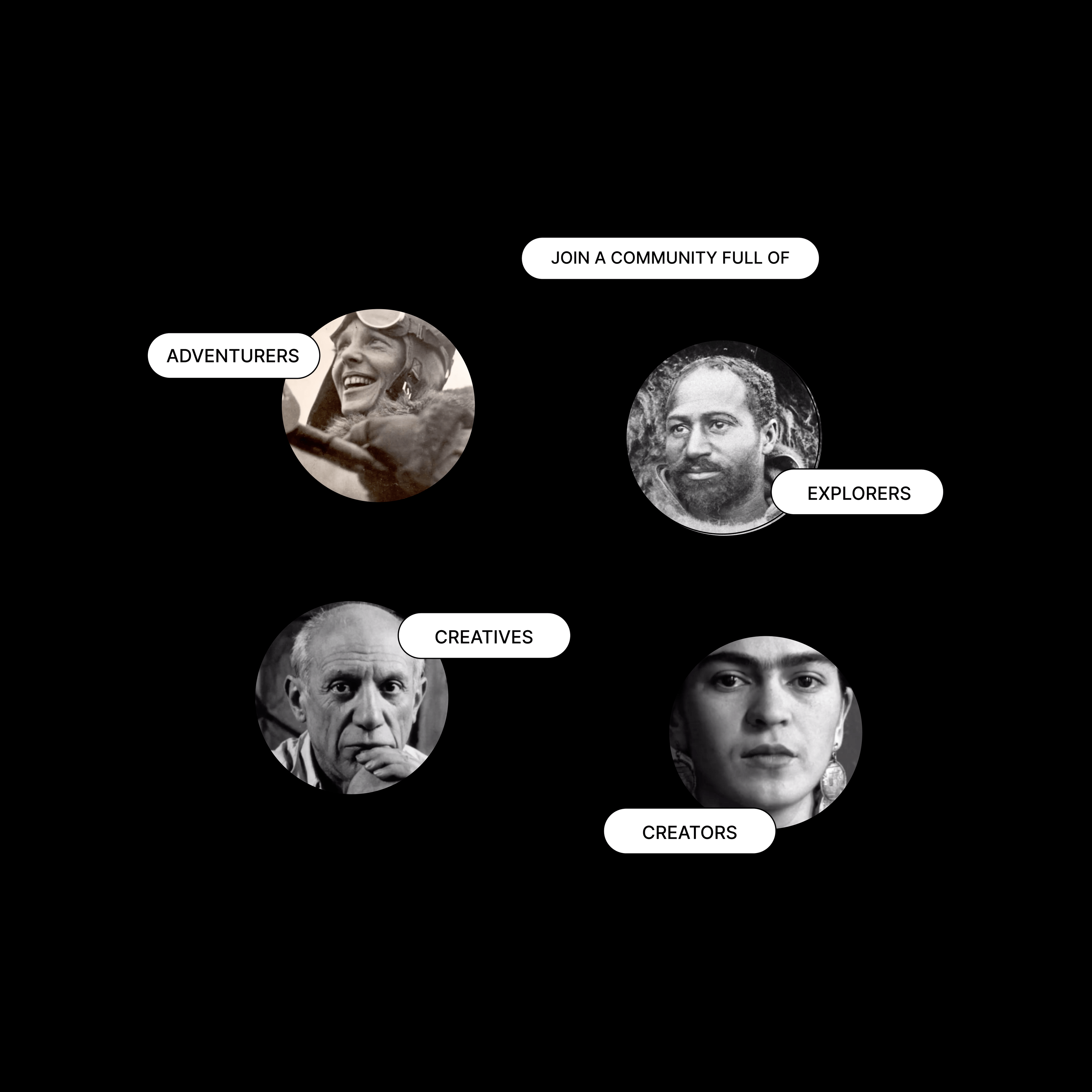
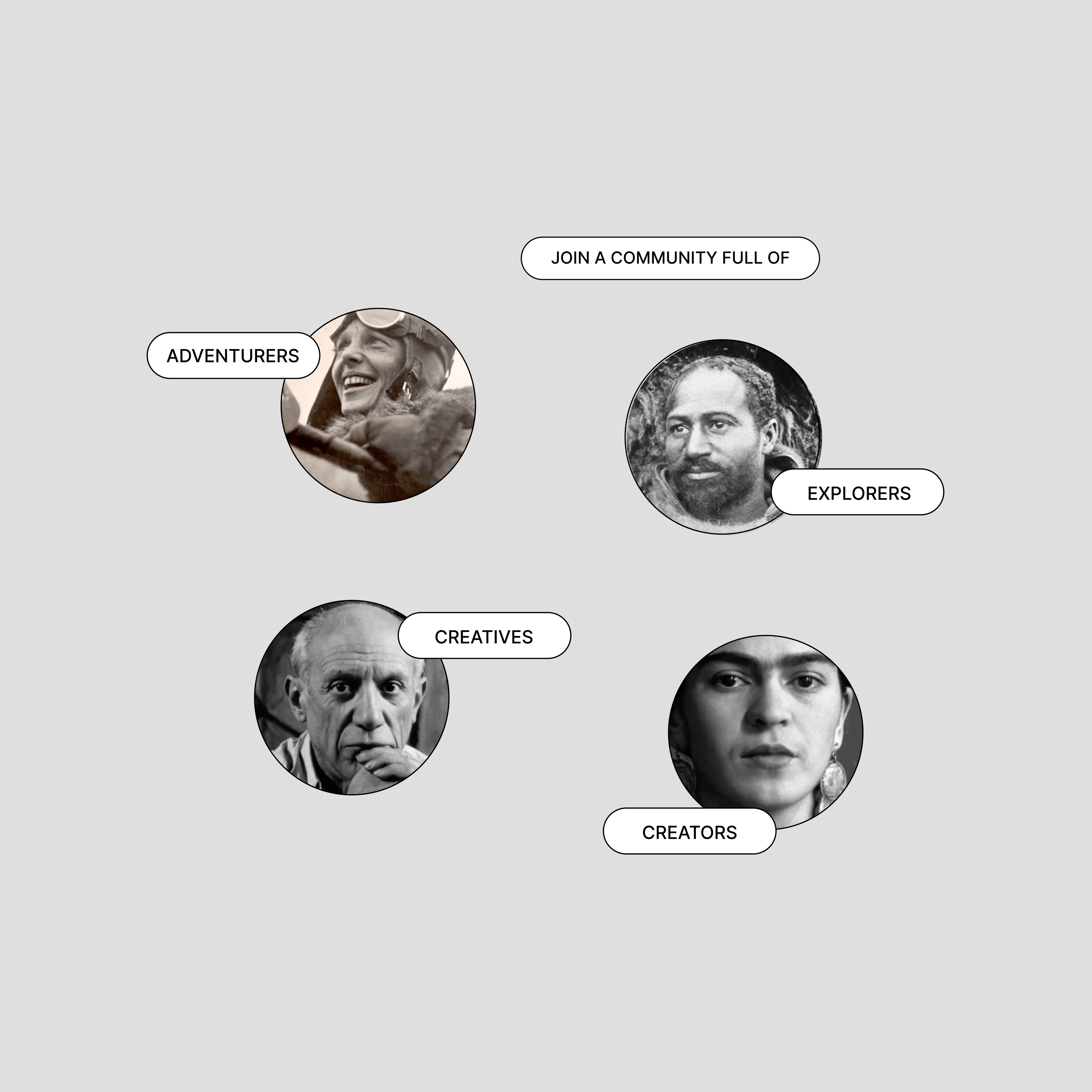
The site had to hold across the ways those two audiences actually show up: on a phone between Discord notifications, on a laptop before a partnership call, in light mode and dark. Same story. Same invitation. Different screens.
.png&w=3840&q=100)
Why It Still Matters
This remains one of the most impactful experiences of my career. Championing design inside a DAO changed how I think about ownership: the product is never yours alone, yet you are still responsible for holding the line. That tension—lead without dictating, listen without dissolving—is a deeper craft than a typical client handoff.
I came in curious about web3. I left understanding how DAOs actually move: through people who care enough to champion an idea in public. A clear goal, a shared filter, and the willingness to iterate with the community—that combination is why this chapter still shapes how I approach product work today.